A well-run group purchases skill, method, and recovery. The missing out on piece, frequently uncovered on a chilly sideline with a gamer gasping or a knee swelling under a sock, is first aid that matches the truths of sporting activity. Common training aids, however get in touch with sporting activities, endurance occasions, and youth leagues each bring patterns of injury and choice pressure that require tailored preparation. When an instructor, group manager, or volunteer finishes a first aid course developed for athletic environments, the distinction shows in little, reliable steps that protect against a strain from coming to be a season-ending tear and, in rare minutes, in minutes that save a life.
Why generic training falls short on the sideline
Traditional first aid training covers the principles: scene safety, calling emergency services, hemorrhaging control, cracks, CPR, and standard medical emergency situations. Those structures matter. Yet sport alters the equation. Injuries happen in clusters, moving, and in front of a group. The field may be sloppy. The locker room may be the only private space. A gamer might urge they are great while adrenaline masks signs and symptoms. Time stress distorts judgment, and substitution guidelines or competition formats subtly influence choices that should remain clinical.
Tailored first aid and CPR training for sports teams adjusts methods to the athletic context. Packaging, storage, and quick-grab set layout vary since the responder is often sprinting to the occurrence. Analysis concentrates on first aid diploma training classes mechanisms common to the sport available, like valgus stress and anxiety in football knees or axial loading in rugby neck injuries. Communication drills consist of handling colleagues, officials, and moms and dads. Documents techniques expect organization testimonial and insurance coverage inquiries. These are not small tweaks. Throughout a season, they reduce missed out on time, secondary injuries, and chaos.
What a sport-specific program should cover
A solid first aid course for groups improves core protocols and after that layers on modules that reflect the rhythms and threats of training and competition. When I design or review such training, I search for 3 anchors: realism, choice technique under pressure, and evidence-based material updated for current sport medication consensus.
Realism means circumstances on a field or court, using handwear covers with cold fingers, sometimes in low light. The very best cpr training will not only educate compressions on a tidy class manikin, it will rehearse bringing an AED via a crowded bench, clipping a jersey, and reducing gear when seconds matter.
Decision technique looks like timed drills where a trainer triages two synchronised problems, perhaps a shoulder dislocation on one sideline and a head knock in midfield. It also consists of the uneasy choice to pull a star athlete for further evaluation. Wedding rehearsal helps vaccinate versus hopeful thinking.
Evidence-based content changes yearly. Blast removal-from-play criteria now highlight progressing symptoms and visible ataxia. Warmth disease protocols stress chilly water immersion as first-line treatment for exertional heat stroke. Spine board methods have moved towards decreasing unneeded immobilization while preserving rigorous control in risky devices. An excellent supplier updates courses and provides a cpr refresher course that incorporates these changes without overwhelming volunteers.
The real injury patterns by sport and season
Not all sporting activities injure athletes similarly. The most effective first aid courses show what groups in fact deal with, not a generic buffet. Throughout youth, amateur, and semi-professional levels, a few patterns repeat.
Collision and get in touch with sporting activities, like rugby and Football, bring head and neck injuries, shoulder dislocations, AC joint sprains, rib injury, and lacerations around the scalp and face. Training should educate fast safety helmet and pad accessibility without tugging the cervical spine, bleeding control near hairlines, and breast bone rub look for responsiveness without careless handling. In these contexts, an AED within 3 mins' reach is non-negotiable.
Field and court sports with rapid cutting, such as football, basketball, and netball, existing ankle sprains, ACL tears, hindering strains, and contusions from kicks or drops. The distinction between a two-week strain and a six-week trouble can depend upon instant choices: stop play, compress appropriately, prevent over-icing, and maintain the joint relatively elevated without suffocating blood circulation. First aid and CPR courses for these teams need to spend time on hands-on ligament anxiety https://sethdjcm316.iamarrows.com/first-aid-courses-for-remote-employees-and-digital-nomads testing, safe sideline re-warm-ups, and traditional return-to-play criteria.
Endurance sports, from cross-country to roadway biking, share dehydration risks, hyponatremia in lengthy races, warm aches, and periodic exertional heat stroke. The best choice under a summer season sunlight is often counterproductive. A jogger surprising with a high core temperature level requires energetic air conditioning first, transportation secondly. A tailored first aid training block that drills "awesome first, after that transportation" and shows exactly just how to establish a tub or tarp-based immersion can save a life.
Ice and snowsports introduce wrist fractures from drops on outstretched hands, shoulder injuries, facial lacerations, hypothermia, and blast. The program ought to instruct fast rewarming concepts, glove-compatible clothing methods, and interaction for large, chilly places where EMS arrival can be delayed.
Martial arts and battling groups require instruction on nosebleeds that won't stop, auricular hematomas, finger and toe misplacements, and secure recognition of concussive signs in athletes inclined to minimize them. Likewise, clear return methods that appreciate competition timing and weigh-in schedules must be covered.
These information issue. When an instructor grabs the best clothing, or when a supervisor recognizes a stinger versus a red-flag cervical concern, it is since the training mirrored the sporting activity's landscape.
Building the right first aid set for a team
Kits fall short groups in 2 foreseeable methods: bloat and scarcity. I have opened up bags the dimension of carry-on suitcases full of things that never ever see daylight, and I have seen kits the size of a lunchbox missing out on standard tape and handwear covers. Excellent courses do not just checklist products, they teach why certain items gain their place and how to set up a two-tier system: a grab package for immediate response and a bench package for extensive care.
The grab package ought to ride with the first responder at training and games. It needs obstacle security, a handful of hemostatic gauze alternatives or at the very least effective dressings, a pocket mask, instantaneous cold packs that actually trigger, natural plaster for compression, a little roll of athletic tape, injury shears, a sugar resource, and the AED where plan enables. A training course worth its charge will certainly pierce in-the-dark pulls so you can get the best pouch by feel.
The bench set or sideline trunk can hold replenishing products, larger splints, slings, additional ice wraps, an infrared thermometer, blister treatment, and a compact air passage adjunct set if your range and regional legislations allow. Consumables tend to go out at events, not midweek method, so programs should coach managers on pre-event checks. Expiration days on AED pads and batteries are entitled to a line on the team schedule, not a sticky note that passes away in the rain.
Sideline assessment that functions when adrenaline lies
Athletes are educated to push pain aside. That complicates analysis, especially in the minutes after an accident or mistake. A strong first aid and CPR course for teams teaches circulation that withstands need to chase the obvious injury first.
- Primary survey: ensure the air passage is clear, examine breathing and blood circulation, seek extreme bleeding. The easiest airway inquiries answer whether you are dealing with life hazard or a musculoskeletal trouble with a ticking clock instead of a siren. Cervical spinal column considerations: if the system recommends axial lots, high-speed rotation, or a high-impact crash with head participation, hold hand-operated stablizing and stay clear of unneeded motion. Technique handoffs, so another staffer can take control of stabilization if needed. Neurological fast check: orientation concerns, smooth search eye tracking when suitable, and rapid arm or leg toughness checks. Refined crookedness disclose more than a take on smile. Secondary study: palpate bony landmarks, examination for ligament laxity with care, and compare bilaterally. When in doubt, paralyze and get rid of from play, after that escalate to medical evaluation.
These steps sound basic theoretically. Under wind, yelling, and a running clock, they come to be habits just if trained continuously. That is why a first aid course designed for sports bakes simply put, sensible drills: twenty secs to develop control, sixty secs to discover life dangers, three minutes to choose play or pull.
Concussion methods that hold up under pressure
No team wants to be the one that let a concussed athlete play on. The risk to long-term mind wellness is not theoretical. Yet the pressure originates from all sides, specifically in removal events. A solid course puts steel in the spinal column of the person making the phone call and gives them easy, defensible triggers to eliminate an athlete.
Red flags include loss of awareness, visible disorientation, postponed verbal responses, balance issues, duplicated throwing up, extreme or getting worse migraine, seizure-like activity, or any kind of neck discomfort with neurological signs. Immediate elimination from play is the only right response to any of these signs.
Just as crucial are the following actions. Silent monitoring far from sound, out the bench. No same-day return when trauma is presumed, no matter sign renovation. Prompt reference for clinical analysis. A graded return-to-play procedure with a minimum of 24 hours in between phases, customized to the professional athlete's symptoms and neighborhood guidelines. The best first aid and cpr courses show personnel just how to document cpr training bundaberg what they saw, the decisions made, and that was alerted. That paper trail secures the athlete initially and the program second.
Breathing and the heart: when seconds matter
Two emergencies outweigh all others in sport: abrupt heart attack and respiratory tract compromise. The good news is, both have clear, practiced reactions that conserve lives when executed fast.
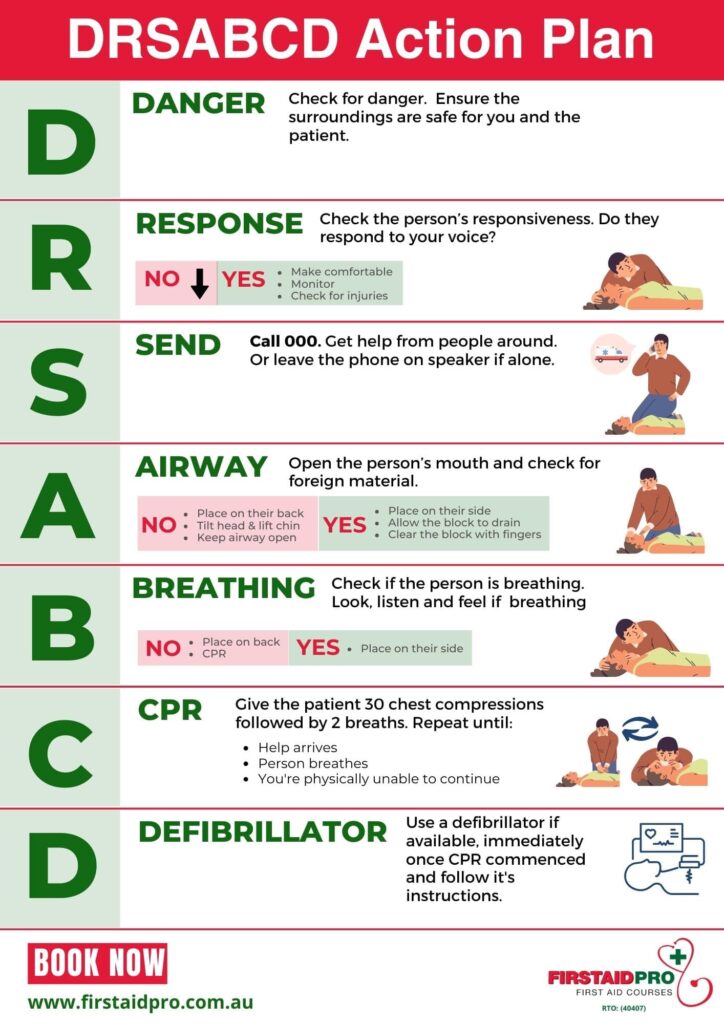
Sudden heart attack in professional athletes is rare, yet it occurs across ages and sports, frequently with no previous warning. A collapsed athlete who is unresponsive and not breathing usually needs CPR right away. Effective cpr training for sports groups reduces the pause between collapse and the initial compression to less than a minute when possible. It additionally guarantees an AED is within rapid reach which staff understand specifically where it is, how to access it past viewers, and how to attach pads on a perspiring chest.
Airway concession occurs from face injury, dental injuries, or swelling. Programs must cover jaw embed believed cervical involvement, effective use of a pocket mask, and the limitations of spectator treatment. In my experience, the groups that practice these abilities every season press faster, shock previously, and communicate with EMS better. That is the distinction that an excellent cpr course creates, especially when freshened every 6 to twelve month with a brief cpr refresher course to combat skill decay.
Heat, chilly, and hydration: the environmental triad
Across environments, 3 ecological stress factors account for lots of avoidable emergency situations: warmth disease, hypothermia, and hydration mismanagement. Each calls for various reactions than a conventional center visit.
Exertional warm stroke is a medical emergency situation specified by central nerves disorder and elevated core temperature level from intense activity. No quantity of sips and color will fix it quickly sufficient. The priority is quick air conditioning, ideally cool water immersion approximately the neck. If a tub is not feasible, tarp-assisted cooling with aggressive ice water dousing works. Transportation after cooling is safer than transport without cooling down when the professional athlete is still hazardously warm. In a reliable sports-focused first aid course, students set up and run these stations as part of the curriculum.
Hypothermia slips up throughout wintertime methods, cool rain, or extended bench time after an injury. The repair is managed rewarming, completely dry layers, cozy sweet beverages if the professional athlete looks out, and gentle handling to avoid arrhythmias in moderate to severe cases. Teams benefit from a silent, sheltered room with blankets and a plan for shuttling players inside your home throughout lengthy stoppages.
Hydration is not merely extra water. In long-duration events, overhydration can lead to hyponatremia, an unsafe dilution of sodium. Courses ought to teach signs that separate dehydration migraine from the confusion and queasiness that suggest hyponatremia. Practical guidance issues here: electrolyte schedule, pre-event weigh-ins to lead customized strategies, and post-event checks where extreme swings set off more evaluation.
Splinting, taping, and understanding when to stop
Sideline care typically depends upon maintaining an injury well enough for risk-free transport and preventing professional athletes from making a small injury worse. Great programs educate minimalist splinting that utilizes what you have: a SAM splint formed and padded effectively, a stiff shin guard as a momentary brace, or a jacket as a sling in a pinch. They likewise clarify extent. Taping can sustain a steady ankle that has actually been reviewed, but it needs to not mask instability just to keep a gamer on the field.
This is where experience matters. A professional athlete with a new shoulder misplacement need to not return that day, even if reduction achieves success in a clinical setting later on. A recurrent patellar subluxation with fast sign resolution might still require traditional remainder regardless of a national championship on the line. A coach that completed a detailed first aid course learns to interact these limits plainly and smoothly, preventing the bargaining that weakens care.

Documentation, communication, and the chain of care
Once the bleeding stops and the professional athlete is risk-free, the task is refrained. What you jot down and that you inform form recuperation and obligation. A solid first aid training program consists of straightforward, repeatable documentation themes: day and time, device of injury, symptoms and signs, activities taken, choices made, and referrals. Maintain duplicates secure yet easily accessible. After significant events, alert league authorities per policy and orient the family members with facts, not speculation.
Communication likewise implies mapping the chain of care in advance. Which urgent treatment or facility knows your group and can see professional athletes on brief notification? Which physio therapist collaborates with your schedule? What is the on-call number for the neighborhood sporting activities medication doctor? When those connections exist, you will not be left looking for help on a Sunday afternoon.
Choosing the appropriate supplier and program format
Not every first aid and cpr course suits a sporting activities team. Look for programs that demonstrate area experience, not simply classroom gloss. A carrier like First Aid Pro or equivalent organizations that focus on applied setups can customize circumstances to your sport and degree. Request for references from other clubs in your region. Verify that the program issues a recognized first aid certificate that satisfies your organization and location requirements.
Course layouts vary. A combined strategy functions well for hectic groups: self-paced online concept adhered to by a hands-on session on your real area or court. Short, high-frequency refresher courses keep abilities sharper than a solitary lengthy class yearly. When budget plans enable, set up a preseason cpr courses block for all staff, then midseason situation refreshers that concentrate on the injuries you have actually seen.
Youth teams and the parent factor
Youth sports include two layers: moms and dads and advancement. Parents may be first on scene during practice, which can aid or impede depending on their training and character. A smart club provides short, open evenings to stroll families with the essentials: recognizing trauma warnings, why specific injuries suggest no disagreement concerning return, how to assist without crowding. Clear sideline roles lower the chaos that can overwhelm a hurt child.
Developmentally, teenagers are not little grownups. Growth plates make complex fracture patterns. Heat health problem shows up quicker in younger athletes, specifically in damp environments. Coaches and volunteers should choose first aid courses that call out pediatric differences, from medication methods to emotional first aid that calms a frightened player.
A season-long plan beats a one-off class
Treat first aid like conditioning: consistent, dynamic, and tied to the schedule. Preseason is the moment for a complete first aid and cpr course, AED checks, package restocking, and place threat walk-throughs. Early season outcomes will emerge patterns. Perhaps ankle joint strains gather on a certain lawn joint or a specific workout drill leaves hamstrings tight. Midseason, run a focused refresher course around those findings. Prior to events, tighten procedures for hydration, recovery, and warmth monitoring. After any kind of major event, conduct a no-blame evaluation to refine procedures.
The groups that do this well build a capability that players count on. They report signs earlier since they know they will certainly be listened to. They go back to play more secure and frequently faster because treatment is coherent across the chain: sideline to clinic to rehab to training.
What customized training resembles on the ground
A club rugby instructor I collaborated with had a scare 2 periods earlier. A prop fallen down after a ruck, mindful yet overwhelmed, then quickly less competent. Sideline personnel began CPR within 45 seconds. The AED arrived from the clubhouse in under 2 minutes because it resided in an intense, signed cupboard near the field gate. One shock, after that compressions. EMS got to 6 minutes. The gamer made a complete healing after a cardiac workup revealed an electric problem. The last item of that story issues: the team's cpr training had included sprint drills to retrieve and operate the AED. Without that method, minutes would have dripped away.
A high school football program I encourage had a various obstacle: a cluster of side ankle strains maintained two starters out for multiple weeks. After a tailored first aid course that emphasized instant compression methods and threat testing, the team changed to on-field elastic compression within two mins of injury and introduced equilibrium drills into workouts. Strain seriousness and time lost stopped by approximately a third over the remainder of the period. No heroics, simply method used consistently.

Costs, compromises, and making it stick
Budgets are genuine. So are volunteer time frame. A thorough first aid and cpr course with sport-specific modules costs greater than a common course, and it requires hours you could spend on drills. The return appears in fewer emergency situation transports, much less lost time, and quieter sidelines. If funds are tight, prioritize high-impact aspects:
- Ensure a minimum of two personnel per team hold an existing first aid certificate with cpr training and AED use. Run one on-field situation session per period, even if brief, to exercise actual logistics. Place an AED where feedback time is under three mins from any playing location, and track pad and battery expiry. Adopt a created blast and heat policy, and train staff to use it without exception. Keep a lean, well-organized grab set and restock after every video game day.
This list supports safety and security without frustrating sources. As ability grows, include pediatric components for young people programs, advanced bleeding control, and customized components for your highest-risk injury patterns.
The peaceful society that wins seasons
Skillful first aid hardly ever makes headlines. It appears in calmer benches, steadier decisions, and athletes who trust that their welfare is not a negotiating chip. Programs developed for sport cement that society. They do more than educate compressions and bandages. They instructor judgment, logistics, and the art of keeping a season on course when bodies collide and weather turns.
Invest in the training, not as a box ticked but as a column of your program. Choose suppliers who understand the field, insist on reasonable technique, and revitalize skills before they fade. Load the right gear, place the AED where it counts, and write down what you do. Over time, your team will certainly lug itself in different ways. And when the tough moment arrives, you will certainly not be improvisating. You will be doing what you educated to do, with self-confidence birthed from practice.